BAD BUNNY’S SUPER BOWL BLACKOUT: THE CASE FOR DECENTRALIZED CLEAN ENERGY IN AMERICA
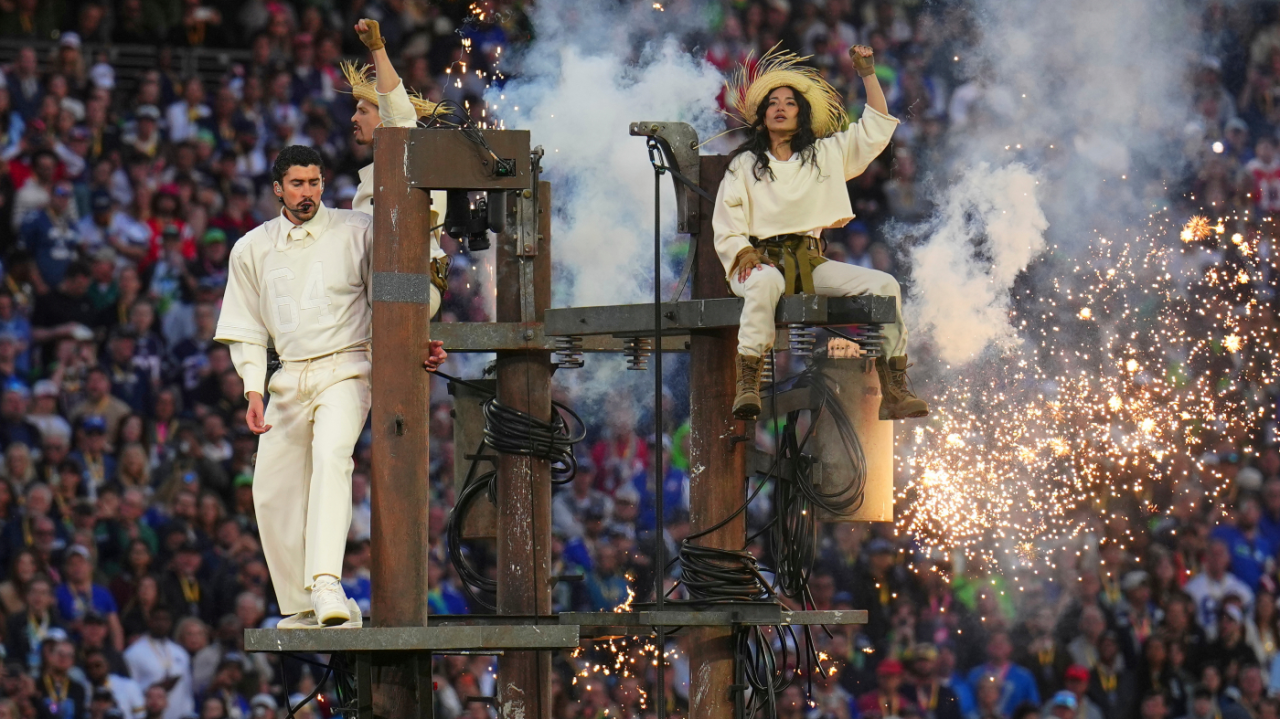
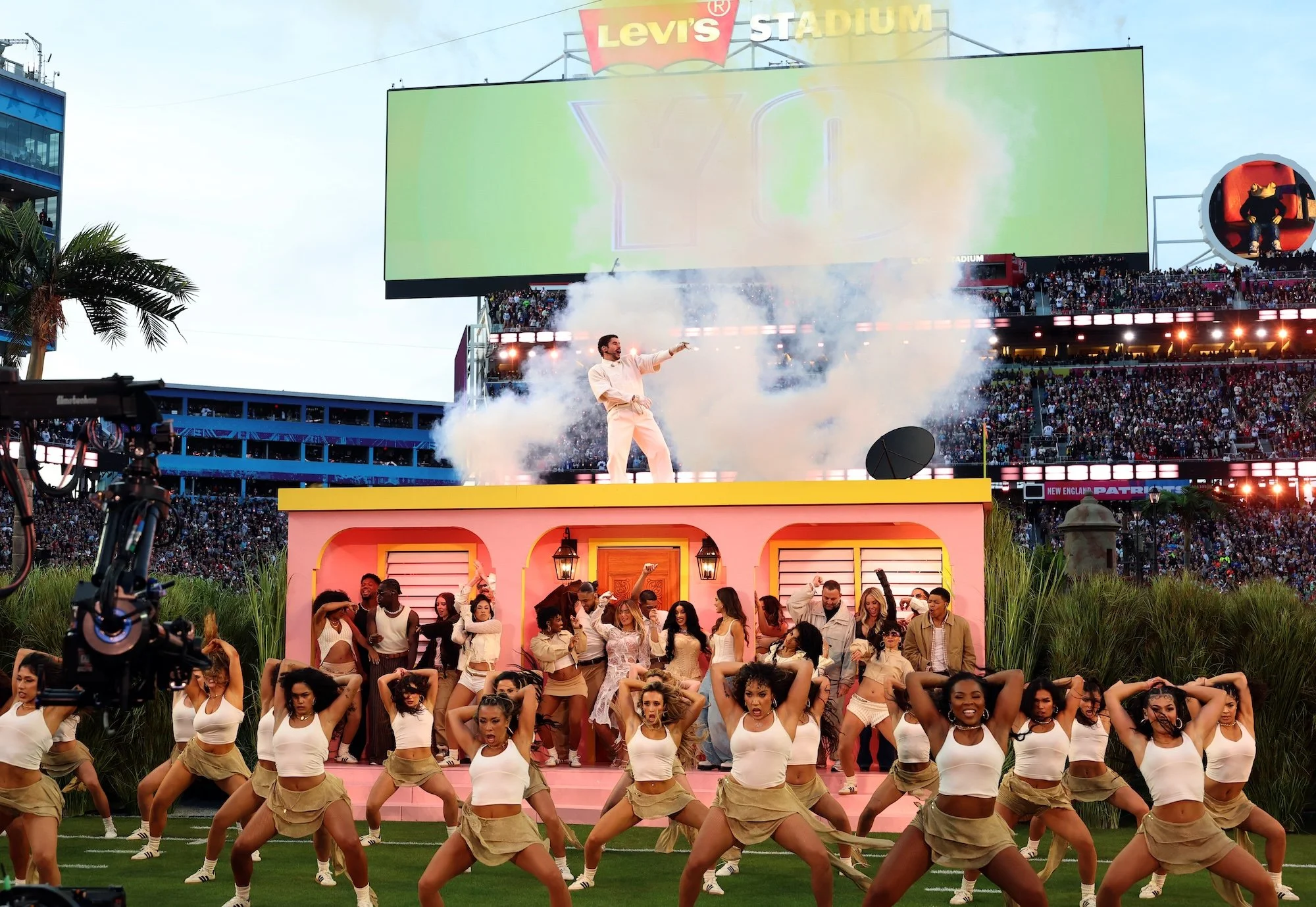
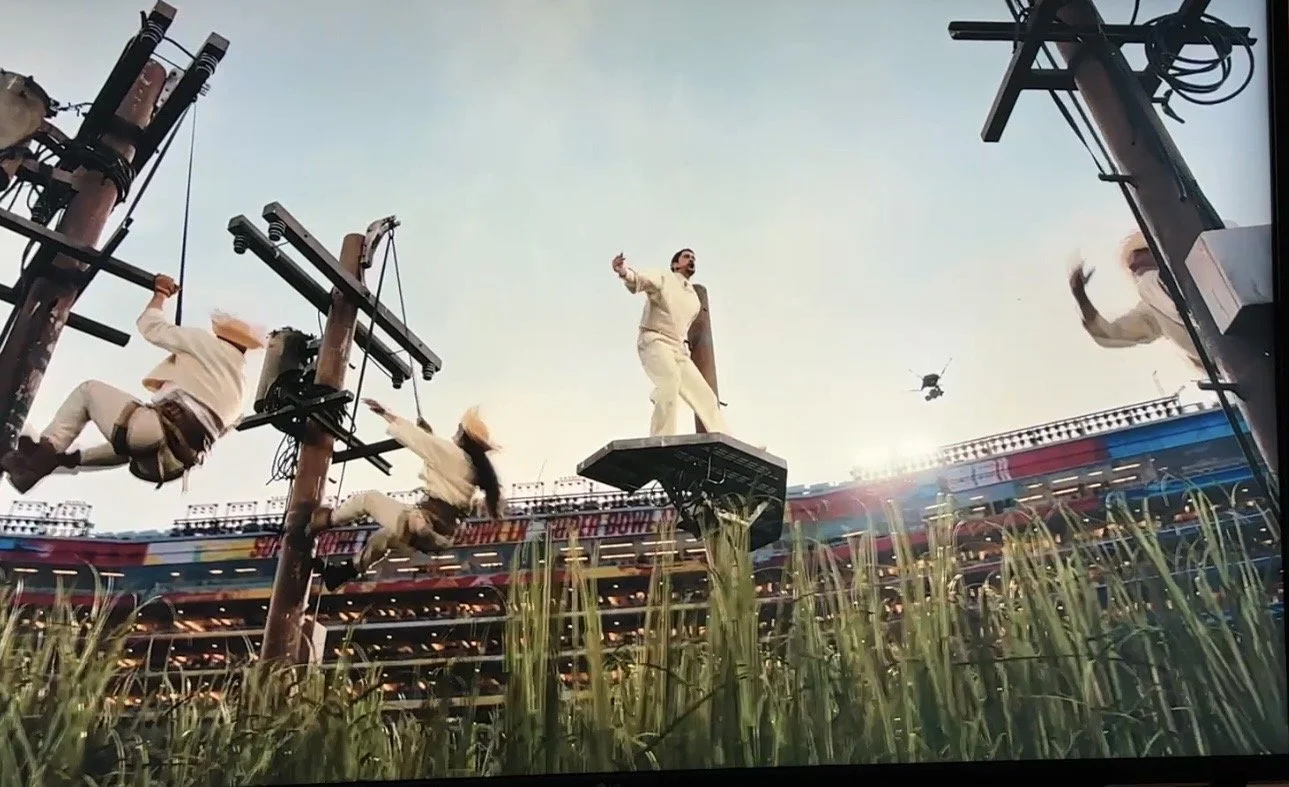
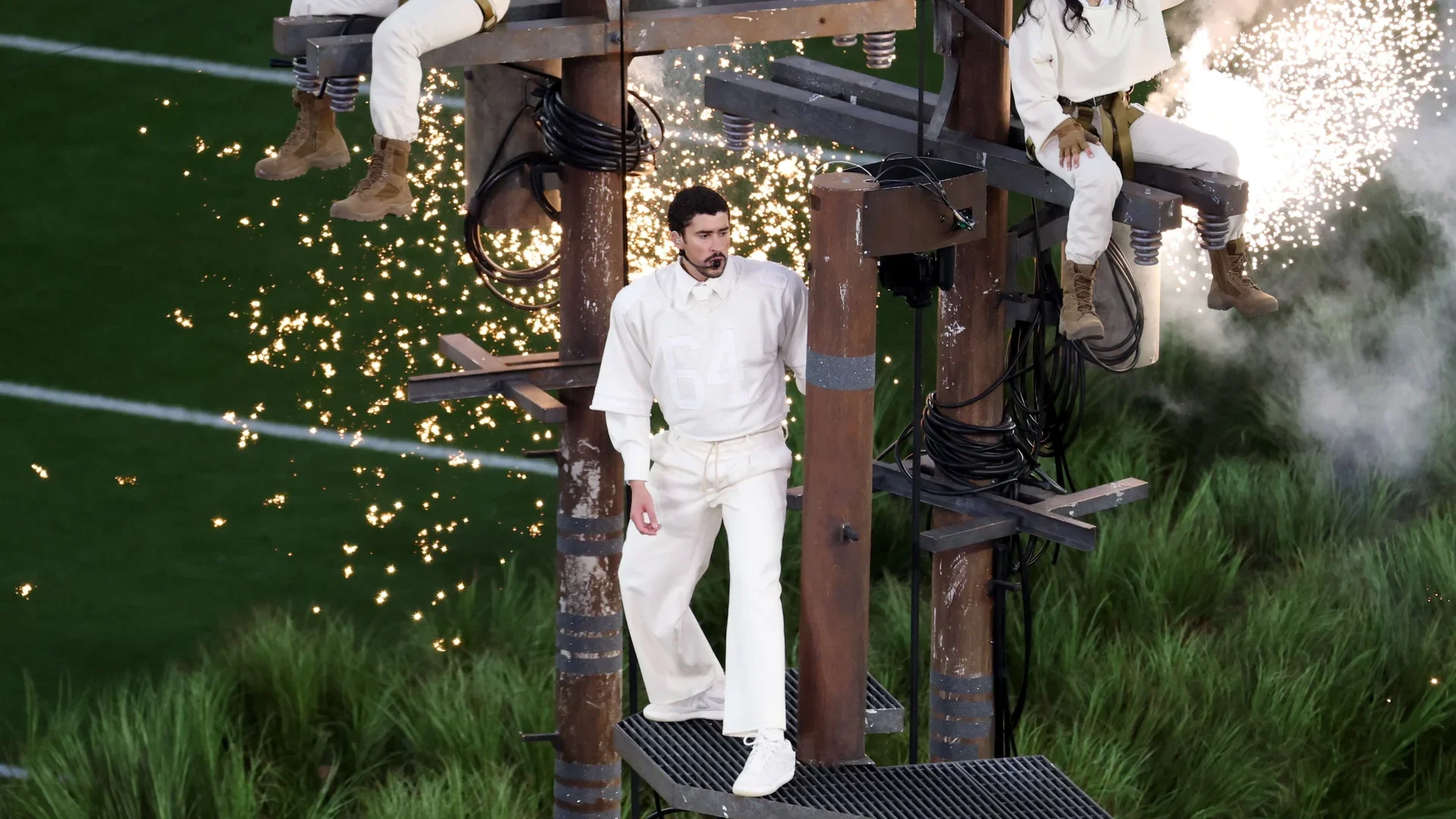
Last night, Bad Bunny climbed a sparking utility pole in front of 135 million people and sang "El Apagón" - "The Blackout" - a protest anthem about Puerto Rico's crumbling power grid. Dancers dressed as utility workers hung from exploding poles. The lights in Levi's Stadium flickered. And for thirteen electric minutes, the biggest artist in the world turned the biggest stage in America into a referendum on who controls power - and who gets left in the dark.
It was a moment about Puerto Rico. But it was also a moment about all of us.
Because here's the thing most people don't realize: what's happening in Puerto Rico isn't an anomaly. It's a preview. The same centralized, fragile, corporate-controlled energy model that has failed 3.2 million Puerto Ricans - leaving them with an average of 27 hours of non-hurricane-related power outages per year - is the same model the rest of America is running on. And it's breaking everywhere. Texas froze in 2021. California burns every year. In communities across the country, a single point of failure on a transmission line can cascade into a regional blackout. The infrastructure is aging. The storms are getting worse. And the playbook hasn't changed.
The question Bad Bunny posed from the top of that pole - arms outstretched, pointing directly into the camera - wasn't just when are we going to do something? It was who is "we"?
This Isn't Just About Electricity. It's About Who Holds Power.
"El Apagón" works on two levels, and that's what makes it one of the most important songs ever performed on a Super Bowl stage. On one level, it's about literal blackouts - the chronic failure of a centralized grid that was privatized and handed to a single company, LUMA Energy, which has been widely criticized for the continued outages plaguing Puerto Rico's residents. On another level, it's about the deeper power dynamics: colonialism, displacement, and the systematic extraction of a community's resources and self-determination.
Bad Bunny has never been subtle about connecting these dots. When he released "El Apagón" in 2022, the music video evolved into a full documentary featuring journalist Bianca Graulau, directly criticizing LUMA Energy, the tax incentives displacing Puerto Rican residents, and the sale of land and beaches to wealthy outsiders. During his tour, he paused performances to deliver messages about the energy crisis before performing the song. And as recently as April 2025, when yet another blackout left 1.4 million Puerto Ricans without power during Holy Week - costing the island an estimated $230 million per day in lost revenue - Bad Bunny took to social media with the same five words: "¿Cuándo vamos a hacer algo?"
These two meanings of "El Apagón" aren't separate. They're the same story.
When a community can't control its own energy, it can't fully control its own destiny. Energy determines whether hospitals stay open during a hurricane. Whether a grandmother can power her dialysis machine. Whether a small business can keep its doors open. Whether a family can stay in their home or is forced to leave. As Bad Bunny told The New York Times about driving through San Juan and seeing tourists enjoying the beaches while locals endure blackouts and displacement: "It's like they were tourists in your life." Energy is the invisible architecture of daily life, and when it fails - or when it's withheld - everything else collapses with it.
This dynamic isn't unique to Puerto Rico. Across America, communities - particularly rural, low-income, and communities of color - are at the mercy of centralized utility monopolies that prioritize shareholder returns over service reliability. The model concentrates both electrical power and economic power in the hands of a few, while distributing risk and cost to the many.
Decentralized clean energy flips that equation entirely.
The Case for Decentralized Power in America
When we talk about decentralized energy - solar microgrids, community-owned solar installations, containerized power systems with battery storage - we're not just talking about a different way to generate electricity. We're talking about a fundamentally different relationship between communities and the infrastructure that sustains them.
Here's what that looks like in practice:
Jobs that stay in the community.
Decentralized energy systems create more local jobs per megawatt installed than centralized power plants. These aren't just construction jobs - they're long-term operations, maintenance, and technical roles that can't be outsourced or automated away. When a community installs its own solar microgrid, the electricians, technicians, and project managers who build and maintain it are local. The economic value circulates within the community rather than being extracted by a distant utility corporation. According to the International Renewable Energy Agency, the global renewable energy workforce hit 16.2 million jobs in 2023, with clean energy consistently outpacing fossil fuels in job growth. In the U.S. alone, clean energy added roughly 64,000 construction jobs in a single year - at a time when the broader construction sector was flat. Imagine what happens when those jobs are distributed across thousands of communities rather than concentrated in a handful of mega-projects.
Innovation that isn't monopolized.
The current centralized model funnels massive public investment - billions in federal dollars, tax incentives, and rate-payer subsidies - through a small number of large utilities and their preferred contractors. The result is an innovation bottleneck. As Canary Media recently reported, the U.S. administration canceled $450 million in grid resilience funding for Puerto Rico and redirected another $365 million meant for rooftop solar and battery storage toward "practical fixes" on the existing centralized grid - effectively doubling down on the same model of far-flung fossil fuel plants and vulnerable transmission lines that hurricanes have already destroyed twice. That wasn't just a policy decision - it was a decision about who gets to innovate and who doesn't. Decentralized energy opens the field. It creates space for startups, community organizations, cooperatives, and entrepreneurs to develop solutions tailored to local conditions. It means the next breakthrough in clean energy might come from a team deploying solar microgrids at disaster sites, not from a boardroom in Houston. When you decentralize the infrastructure, you decentralize the opportunity.
Resilience that doesn't depend on a single point of failure.
Puerto Rico's centralized grid was essentially destroyed by a single hurricane because it was designed around a few large power plants connected by long, vulnerable transmission lines running through mountainous terrain. When those lines went down, the entire island went dark - for nearly a year, the longest blackout in American history. Decentralized systems, by contrast, are inherently resilient. A solar microgrid with battery storage at a hospital, a school, or a community center can island itself from the larger grid and keep operating independently.
And this isn't theoretical. It's already working. As of mid-2025, Puerto Rico had 1.2 gigawatts of grid-connected rooftop solar installed on homes and businesses - supplying more than 10% of the island's total energy. During a power-generation shortfall last July, the grid operator actually relied on customers' own batteries to prevent a full system collapse. The community organization Casa Pueblo launched one of Puerto Rico's first neighborhood microgrids in the mountain town of Adjuntas, and has since expanded to five systems serving residences and fifteen businesses. Nicky Vázquez, who owns a laundromat on the microgrid, reported an 80% reduction in his electricity bill and zero power outages since joining. "Now I have stability, I don't run out of power, and I can continue to provide service," he said.
When the next storm hits - and it will - the question shouldn't be "how long until the utility restores power?" It should be "does this community already have the power it needs?" This is equally true for wildfire-prone California, tornado-prone Oklahoma, and hurricane-prone Florida. Resilience isn't a regional issue. It's a national imperative.
Fewer people getting hurt and killed on utility poles.
This is the part of the story that doesn't get enough attention. Electrical power-line installation and repair is one of the ten most dangerous jobs in America. The fatality rate for lineworkers is nearly 400% higher than the national average across all occupations. An average of 26 linemen die on the job every year, with thousands more suffering serious injuries - electrical burns, falls from height, transportation incidents. After Hurricane Maria, when the government and LUMA couldn't restore power fast enough, ordinary Puerto Ricans - untrained citizens - began climbing utility poles themselves to reconnect their neighbors' power. People risked electrocution and falls because the centralized system had failed them so completely that self-restoration became the only option. Every solar panel on a rooftop, every battery in a community microgrid, every containerized power unit deployed at ground level is infrastructure that doesn't require someone to climb a pole in a thunderstorm. Decentralized energy isn't just cleaner and more resilient - it's physically safer for the humans who build and maintain it.
Energy sovereignty as a form of self-determination.
This is the thread that ties all of it together, and it's the theme that underscores what Bad Bunny was really singing about. When a community owns its energy infrastructure - when the solar array belongs to the neighborhood, when the battery storage is controlled locally, when the microgrid can operate independently of a corporate utility - that community has sovereignty. Not just over electrons, but over its own future. It can set its own rates. It can prioritize its own needs. It can weather a crisis without waiting for permission or rescue from a distant authority. Energy sovereignty is economic sovereignty. It's political sovereignty. It's the ability to say: we are not dependent on a system that has repeatedly failed us. We built our own.
From Physical Power to Human Power
There's a reason Bad Bunny's Super Bowl performance resonated so deeply beyond the Puerto Rican diaspora. The symbolism of "El Apagón" - the blackout - is universal. Every community in America has experienced some version of powerlessness: the feeling of being at the mercy of systems too big to influence, too opaque to understand, and too slow to respond when things go wrong.
The decentralized energy movement is, at its core, a power redistribution movement. It takes the thing that makes modern life possible - electricity - and puts the means of producing it in the hands of the people who need it most. That's not just an energy policy. That's a philosophy of governance, of economics, of community.
After Hurricane Maria, when the grid was destroyed and the government's response was catastrophic, Puerto Ricans didn't wait. Citizens taught themselves basic electrical skills. Activists like Alberto "Tito Kayak" de Jesús Mercado - a certified electrician - went house to house reconnecting power for his neighbors. Community organizations installed off-grid solar charging stations in rural areas that the utility had abandoned. The people became the grid.
That's the blueprint. Not helplessness. Not dependency. Agency.
And that's the message Bad Bunny carried to the top of that sparking utility pole, waving the Puerto Rican flag, singing to 135 million people: the only thing more powerful than a blackout is a community that refuses to stay in the dark.
The infrastructure exists to make this real - not just in Puerto Rico, but across America. Containerized solar microgrids. Battery storage systems. Mobile clean energy units that can be deployed for disaster response, construction sites, festivals, and permanent community installations. The technology is here. The economics work. The jobs are real.
The only question left is the same one Bad Bunny asked: ¿Cuándo vamos a hacer algo?
When are we going to do something?